
Passkey Authentication for Financial Platforms
By MALI ·
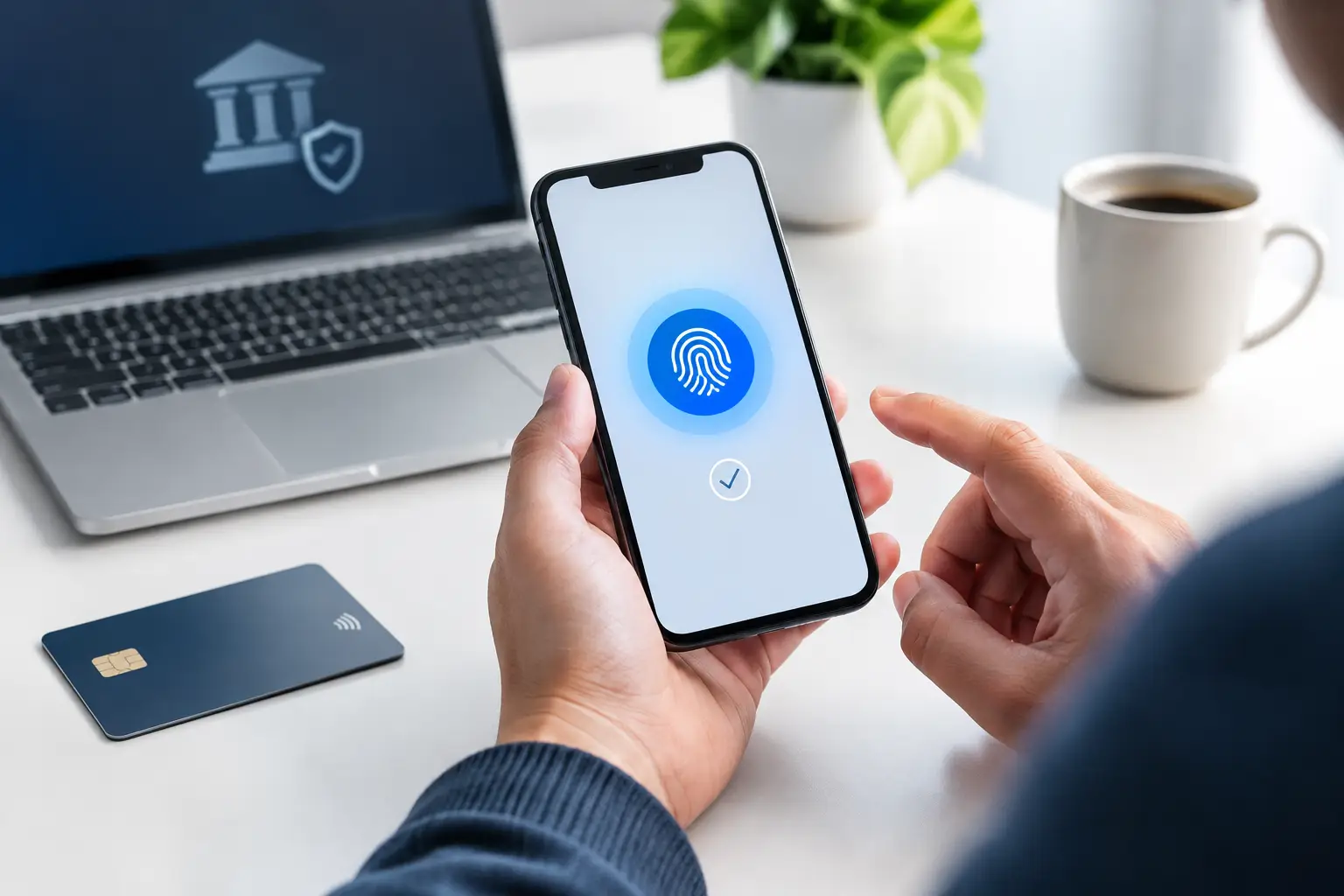
A financial terminal is not a casual login surface. It is the point of entry to proprietary research, market monitoring, watchlists, prompts, models, and decision workflows. Passkey authentication for financial platforms changes that entry point from a password-dependent process into a cryptographic control designed for the way professional users actually work.
For institutions and independent professionals alike, the value is not convenience alone. A well-designed passkey program can reduce phishing exposure, remove password reset friction, and establish a clearer relationship between a verified user, a trusted device, and a specific session. That matters when access to financial intelligence increasingly includes the ability to direct AI agents.
Why Passwords Are a Weak Control for Financial Workflows
Passwords persist because they are familiar, portable, and easy to deploy. They are also routinely reused, guessed, captured through phishing pages, exposed through credential leaks, or shared outside approved channels. Adding one-time codes improves the picture, but codes can be intercepted or socially engineered, and they introduce friction at precisely the moment an analyst needs to enter a market-moving workflow.
The problem is not limited to account takeover. Password-based access makes it harder to distinguish a legitimate user session from one initiated by an attacker using valid but stolen credentials. In a financial environment, that ambiguity affects more than personal account data. It can expose research history, firm-specific views, saved screens, internal notes, and the context behind investment or corporate-finance decisions.
A terminal should treat authentication as part of the operating model, not as a form placed before the product. The access layer needs to support speed under pressure while preserving evidence of who entered the workspace and how that identity was verified.
How Passkey Authentication for Financial Platforms Works
A passkey is built on public-key cryptography. When a user enrolls, their device creates a private key and a corresponding public key. The platform stores the public key, while the private key remains protected by the user’s device or credential manager. At sign-in, the platform sends a challenge that can be signed only by the private key.
The user confirms the request through a device control such as biometric verification or a device PIN. The biometric data itself is not sent to the platform. It remains within the device’s local security boundary. What the platform receives is cryptographic proof that the approved credential completed the authentication request.
This model makes conventional phishing materially less effective. A fraudulent site cannot simply collect a reusable secret because there is no password to type. The credential is also tied to the legitimate relying party, which helps prevent a passkey created for one domain from being used on a lookalike domain.
That distinction is operationally meaningful for financial teams. A credential that resists phishing is more valuable than a stronger-looking password policy that still depends on users recognizing a sophisticated impersonation attempt at 6:30 a.m. before the opening bell.
The Security Gain Is Real, but It Is Not Absolute
Passkeys address a major category of identity risk, not every category. A compromised endpoint, an active browser session, malicious extensions, remote-access malware, or a coerced user can still create exposure. Session controls, device posture checks, anomaly monitoring, and clear revocation procedures remain necessary.
There is also an implementation choice to make. Device-bound credentials can offer a tighter control boundary because the credential remains on a particular approved device. Synced passkeys, which can be available across a user’s approved devices through an ecosystem provider, improve continuity and reduce lockouts. The right choice depends on the sensitivity of the platform, the organization’s device-management model, and its recovery requirements.
For a personal professional account, a synced passkey may provide a strong balance of security and availability. For a restricted institutional workspace handling highly confidential research or privileged internal information, a firm may prefer device-bound credentials, managed hardware, and policy-driven enrollment. Security design should match the consequence of access.
Authentication Must Fit Institutional Reality
Financial platforms rarely serve a single user type. A portfolio manager, research analyst, compliance officer, advisor, and corporate treasury team may all use the same intelligence environment differently. They require different permissions, data entitlements, session rules, and review obligations.
Passkeys establish who is entering the platform. They do not replace authorization. After authentication, the platform must still determine what that person can view, export, configure, or ask an AI agent to do. Role-based permissions and data entitlements should remain explicit, reviewable, and separated from the sign-in experience.
The same applies to federation. Many organizations rely on enterprise identity providers for onboarding, offboarding, and access governance. Passkeys can complement that architecture rather than displace it. An enterprise may use its identity provider as the central authority while requiring phishing-resistant authentication at the point of access to a financial intelligence portal.
A mature design also anticipates exceptional conditions. Analysts change phones. Managed devices are replaced. A user may lose access while traveling, and a firm may need to disable credentials quickly after a departure or suspected compromise. Recovery cannot become a loophole that is easier to exploit than the normal login process. It should be deliberate, logged, and proportionate to the account’s privileges.
AI Agent Access Raises the Standard
An AI agent dashboard introduces a second control question: not only who may enter, but what an authenticated user may instruct the system to do. An agent that summarizes filings or organizes research presents a different risk profile from one that can distribute outputs, call connected services, or alter a shared workflow.
Authentication should therefore lead into an accountable session. The platform should preserve records of session initiation, significant actions, permission changes, and agent activity at a level appropriate to the service. For sensitive actions, step-up verification may be warranted even after the initial passkey sign-in. This is especially relevant when an action changes user access, exposes restricted information, or triggers an external workflow.
The goal is not to burden routine research with repeated challenges. It is to apply control where the risk changes. Reading a public earnings transcript and exporting a restricted internal research set are not equivalent actions. A system that treats them identically is simple, but not necessarily disciplined.
At MALI, this principle aligns with a command-center model: secure entry, structured intelligence access, and bounded AI-agent activity within a governed professional workspace.
What Good Passkey Deployment Looks Like
The strongest rollout begins before enrollment. Users need a clear explanation of what a passkey is, where it is stored, how it can be used across approved devices, and what to do when a device is lost. Technical accuracy matters here. Vague promises about security create confusion during the first recovery event.
Enrollment should be intentional and observable. A platform needs to know when a credential was added, which account approved it, and whether the enrollment followed the required policy. Administrators need tooling to review active credentials and revoke them without waiting for a user to respond.
Session design deserves equal attention. Financial professionals often maintain long research sessions, but indefinite sessions increase exposure on unattended devices. Reasonable inactivity limits, visible session status, reauthentication for high-impact actions, and the ability to terminate sessions centrally create practical protection without turning the terminal into an obstacle course.
Finally, measure outcomes rather than treating passkeys as a checkbox. Track failed sign-ins, recovery requests, help-desk volume, suspicious enrollment patterns, session revocations, and adoption by user group. Those signals show whether the control is reducing friction and risk at the same time.
A Better Standard for Financial Access
Passkeys are most valuable when they support a broader access discipline: verified identity, least-privilege authorization, accountable sessions, and measured recovery. They are not a substitute for governance, endpoint protection, or thoughtful AI-agent controls. They make those controls more credible by removing one of the most frequently exploited weaknesses in professional software access.
For financial platforms, the practical question is no longer whether passwords can be made slightly less inconvenient. It is whether the entry point to sensitive intelligence reflects the quality of the decisions made inside it. Start with the session boundary, define the recovery path before an incident, and give every user a clear, trusted way to initialize access.